
What Children Learn From Everyday Montessori Classroom Experiences
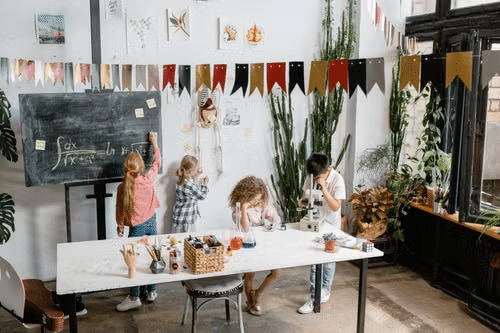
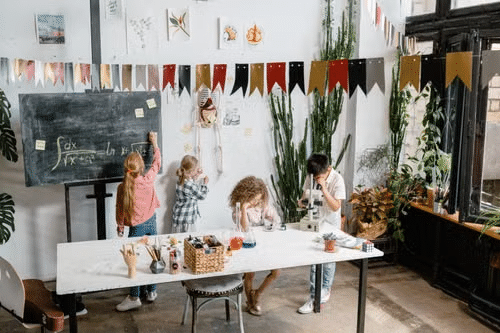
What does learning look like when there is no worksheet, no lesson happening at the front of the room, and no adult telling every child what to do next? In a Montessori classroom, it can look like a child choosing an activity, repeating a task, observing a classmate, correcting an error, or simply taking care of the space around them.
These moments are easy to overlook because they are part of the normal classroom routine. But for kids, they can be meaningful learning experiences. Understanding these everyday moments gives parents a better sense of what Montessori education for young learners looks like beyond the formal lessons.
Why Can Montessori Learning Look So Ordinary?
A Montessori classroom doesn’t always look like a traditional learning environment.
Children might be working with materials, looking through books, arranging objects, or completing a familiar activity. There may not be a worksheet or visible assignment showing what they have learned.
But there is usually a purpose to these experiences. Children are provided with opportunities to interact with their environment, make choices, practice skills, and observe the result when they try something different.
The learning is often found in how children approach an activity, not just in whether they finish it.
What Happens When Children Repeat an Activity?
Repetition is easy for adults to overlook. A child doing the same activity for the third or fourth time may seem ready for something new.
For the child, however, the repeated experience may be helping them:
- Understand the sequence of an activity
- Refine their movements
- Notice small differences
- Recognize and correct mistakes
- Become more comfortable completing the task
A Montessori experience for children allows room for this repetition instead of treating every repeated attempt as unnecessary.
What Do Children Learn When They Choose Their Work?
Choice is a regular part of Montessori classrooms, but it does not mean children can simply do anything they want.
The classroom offers appropriate materials and clear expectations. In that environment, children are given opportunities to choose what they are going to work on and when they are ready to move on.
These everyday decisions can involve:
Selecting an activity: The child considers what they want to work with.
Getting started: They gather the required material and begin.
Staying with the work: They have time to complete the activity rather than constantly switching.
Moving on: They decide what comes next within the classroom routine.
These experiences, over time, allow children to become active participants in their classroom rather than waiting for constant direction from adults.
Why Does the Teacher Sometimes Step Back?
One detail parents may notice during a classroom visit is that a teacher does not always intervene immediately.
A teacher may first observe whether the child can work through the difficulty independently. The teacher may model the process, give a prompt, or support the child in approaching the problem in a different way if the child needs support.
This means that the teacher is not just a spectator. Observation helps teachers to see when a child needs help and when they might need more time to work something out.
This is an important part of Montessori growth-focused education because support can be adjusted according to what the child is actually doing.
What Do Children Learn From Working Around Other Children?
Montessori classrooms are shared spaces. Children may be working on different activities while using the same shelves, tables, floor areas, and materials.
That creates everyday opportunities to learn how to participate around others.
Children may need to:
- Wait for a material
- Move carefully around another child’s work
- Listen when someone is speaking
- Ask before interrupting
- Return shared materials
- Give another child space
These are not separate “social lessons.” They happen naturally as children become part of a classroom community.
What Is the Learning Behind Everyday Responsibilities?
Some classroom experiences can look like simple chores.
A child may carry a material, put something away, wipe a table, arrange an area, or prepare a workspace. It may not look like much, but it’s a chance for the kids to participate in looking after their environment.
They begin to understand that classroom spaces are shared and that completing an activity also involves looking after what comes next.
This is one reason Montessori education for young learners connects learning with everyday participation rather than separating the two.
What Happens When a Child Makes a Mistake?
Mistakes are another part of ordinary classroom learning.
A material may not fit correctly. An object may be placed in the wrong order. A child may realize that something they tried did not produce the expected result.
Instead of immediately providing the answer, a Montessori teacher may give the child a moment to notice the problem.
The child can then:
- Look at what happened.
- Consider what may have gone wrong.
- Try a different approach.
- Ask for help if they still need it.
Not every mistake can be solved independently, and teachers still provide guidance. The difference is that children are given opportunities to think about the experience themselves.
What Might Parents Notice Outside the Classroom?
The results of these experiences are not always obvious as academic achievements.
Parents may instead notice changes in everyday behavior, such as a child:
- Attempting something before asking for help
- Taking greater care with familiar tasks
- Remembering where belongings belong
- Staying with an activity longer
- Trying another approach when something fails
- Making simple choices with less hesitation
Every child develops differently, so these changes will not appear on the same timeline.
At Sparkle Montessori, everyday classroom experiences are part of a broader environment where children can explore, practice, interact, and receive guidance throughout the day.
Why Do These Experiences Matter Over Time?
One classroom moment rarely tells the whole story.
A child may repeat an activity today, notice an error tomorrow, and approach a similar challenge differently a few weeks later. These small experiences accumulate.
That is where the Montessori experience for children becomes meaningful. The classroom gives children repeated opportunities to participate instead of making learning something that only happens during a formal lesson.
For families considering Sparkle Montessori preschool, observing these ordinary moments can offer a better understanding of what children are actually learning each day.
Sometimes, the most meaningful learning is happening while a child is simply choosing, trying, observing, adjusting, and trying again.
FAQs
1. What does a typical Montessori classroom experience include?
It could be individual work, small group work, Montessori materials, classroom jobs, movement, reading, practical life activities, and teacher-led lessons.
2. Why do Montessori children repeat activities?
Through repetition, children have time to understand the process, refine their movements, notice details, and become more comfortable in doing the activity.
3. Do Montessori teachers help children when they struggle?
Yes. Teachers observe first and then provide appropriate support, which could be in the form of a demonstration, prompt, explanation, or further guidance.
4. Is everything children do in a Montessori classroom considered learning?
Not every moment needs to be a lesson. Daily interactions, habits, decisions, and classroom duties can also contribute to a child’s overall development.
5. What should parents observe during a Montessori preschool visit?
Examine the way that children interact with the environment, the way teachers react to the children, the organization of the materials, and the opportunity for children to engage in authentic experiences and not just be busy.