
Fremont Children’s Care Programs: Supporting Early Growth and Learning
A child’s early years are full of small moments that matter more than they look. How they learn to communicate, explore, build friendships, and handle something new- a lot of that gets shaped before formal school ever starts, and it doesn’t always happen through planned activities.
Sometimes it’s a conversation during snack time, a disagreement on the playground, or a task a child tries three times before it works. The right Fremont children’s daycare makes room for all of it while giving children the support they need to grow at their own pace.
Why Does the Way Children Are Cared for Matter During the Early Years?
Young children pick up on everything – how adults answer their questions, how caregivers handle frustration, if the environment feels safe enough to try something new. That dictates how comfortable they get at communicating and exploring.
Good care isn’t just supervision. It’s paying attention, responding in the right way at the right time, and knowing when to step in versus when to let a child work something out. Unstructured time matters too- play, rest, just being around other people without any particular goal.
How Do Everyday Interactions Become Learning Opportunities?
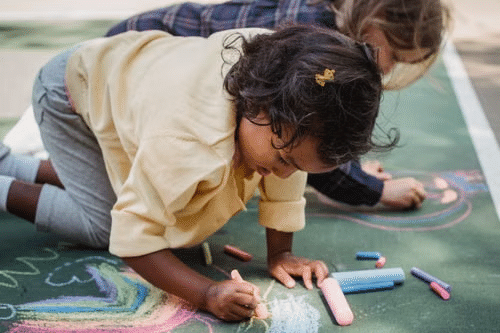
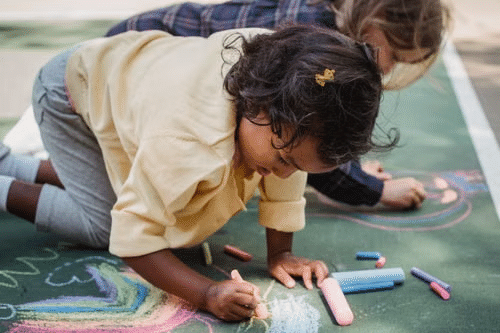
A child asks a question. That becomes a conversation. Two children disagree over a toy. That becomes a chance to express something and hear someone else out. A new task doesn’t go right the first time. That becomes a small lesson in effort.
None of this needs to be planned. Caregivers can support these moments without turning every interaction into a teachable lesson. The learning happens naturally because the situations feel real to the children living through them.
What Can Children Learn Through Relationships With Caregivers?
A familiar, responsive adult makes a real difference. Conversations build language. Patient responses help children feel comfortable saying what they need or feel. Children also watch- quietly, constantly- how adults communicate, handle problems, and respond to other people.
Those repeated observations add up. And a good caregiver also knows when to step back and let children explore without directing everything they do.
How Does Interaction With Other Children Contribute to Early Growth?
Group settings expose children to different personalities, different ideas, different ways of doing things. Sharing space. Waiting. Explaining what you want. Figuring out what to do when someone else disagrees.
Disagreements aren’t something to avoid; with the right guidance, they become practice. Children gradually learn that other people see things differently and that problems can be talked through rather than just avoided. It doesn’t need to go perfectly every time. Age-appropriate chances to figure it out are what matter.
How Can Caregivers Respond to Different Children Without Treating Them Exactly the Same?
Same situation, completely different reactions- that’s just children. One joins a group activity immediately. Another watches from the edge for a while first. Some ask for help straight away. Others need to try alone before they’ll accept it.
Fremont daycare personalized care means noticing those differences and adjusting rather than expecting everyone to respond the same way.
That might look like:
- Giving a hesitant child more time before pushing participation
- Staying close during something unfamiliar
- Offering more guidance when a task is genuinely hard
- Giving a confident child more room to explore independently
It’s not a separate program for every child. It’s just paying close enough attention to know what each one actually needs.
Can a Child’s Interests Shape What They Learn During the Day?
Usually yes, and it tends to work better than structured activities. A child who loves animals asks more questions during a story about them. A child who enjoys building experiments longer with materials.
These interests can be used by caregivers to initiate conversations and to play and explore in meaningful ways. Fremont daycare daily activities don’t need to be formal to be worthwhile- genuine interest is often what keeps children engaged long enough to actually learn something.
How Can Care Programs Balance Individual Needs With a Group Setting?
Structure matters for the group. Individual differences matter too. These don’t have to conflict.
Children learn at different speeds. They require different amounts of encouragement and respond differently to the same activity. The balance is to maintain the expectations while varying the support to the individual. It helps children feel included without expecting everyone to develop on the same timeline.
What Should Parents Notice About the Quality of Care?
A visit tells you more than any brochure. Watch what actually happens in the room.
| What to Observe | What to Consider |
| Caregiver interactions | Are adults attentive and responsive? |
| Children’s participation | Do children have room to explore? |
| Difficult moments | How are frustration and disagreements handled? |
| Individual support | Can caregivers adjust their approach? |
How Can Fremont Children’s Care Programs Support Learning Without Becoming Overly Academic?
Young children don’t need school before school. They learn through play, movement, conversation, relationships, and just experiencing things. When comparing Fremont children’s care programs, look at whether the environment gives children space to learn naturally- not whether every hour is filled with structured activity.
Room for curiosity, free play, social interaction, and rest isn’t wasted time. It’s how early development actually works.
How Does a Montessori Setting Connect Care With Early Learning?
At Sparkle Montessori, care and learning aren’t separate things. Caregivers observe what children are interested in throughout the day, respond to individual needs, and make space for exploration, not just during designated activity time.
Schedule matters if you’re a family considering Fremont daycare with flexible childcare, but it’s not the only thing. What children experience during those hours counts for just as much. At Sparkle Montessori, care, interaction, and learning are woven into the everyday, rather than being separate activities.
Why Can Everyday Care Become Part of a Child’s Learning Journey?
Learning doesn’t stop when a planned activity ends. A conversation, a new friendship, a hard moment, a chance to try something independently- all of it feeds into early development in ways that aren’t always obvious at the time.
For parents looking at Fremont children’s daycare, the better question isn’t how many activities a program offers. It’s how thoughtfully children are supported through the whole day. When care and learning actually work together, the ordinary moments are the ones that count.
FAQs
- How can daycare support learning without formal lessons?
Through play, conversation, exploration, and other daily social interactions with caregivers and other children.
- What does personalized care mean in daycare?
Observing how the children differ in their needs and adapting assistance according to those specific needs of the children.
- Can children learn through everyday daycare interactions?
Yes, conversation, disagreement, problem solving and play all develop real skills.
- What should parents observe when visiting a daycare?
How caregivers actually interact with children, especially during frustration or difficulty.
- Does early learning have to be academic?
No. Play, relationships, and everyday experience are how young children actually develop.