Best Preschools Fremont CA for School Readiness and Growth
Starting school is a big milestone, and it’s natural for parents to wonder whether their child will be ready when the time comes.
However, sometimes the answer does not lie in the amount of literacy and numeracy skills acquired. School preparation occurs in daily interactions that teach children to be eager learners, communicators, and independent thinkers.
This is why some preschools Fremont CA pay much attention not just to academic knowledge but rather create situations where children get involved in establishing routines, interacting with other kids, and problem-solving, thus gaining self-confidence.
What does “school readiness” really mean?
It’s easy to picture school readiness as a checklist: can they write their name, do they know their ABCs, can they count? Those things help, but they’re not the whole story.
It is important for a child to engage actively in classroom activities, follow a routine, socialize with other children and cope well with the situation even if everything does not always go as expected. Such skills do not come all of a sudden. They develop gradually.
A child who’s willing to try new things, who can express what they need, and who knows how to follow along; that child is often more prepared than one who can recite the alphabet but falls apart when the day doesn’t go as expected.
Are academics the biggest part of school readiness?
They matter, but they shouldn’t be viewed as the only measure of readiness.
A child who enjoys learning, who asks questions, who doesn’t shut down when something is hard; that child tends to do well once they’re in school, regardless of where they started academically.
What educators often point to instead is a more balanced kind of preparation:
- Building independence through small daily responsibilities
- Learning to listen and follow simple directions
- Talking comfortably with adults and other children
- Getting used to working alongside others
- Handling small frustrations without giving up
These aren’t dramatic skills. But they make an enormous difference in how a child experiences those first months of school.
What signs show that a child is becoming school-ready?
It usually shows up in small, everyday moments rather than anything formal. Parents tend to notice it before they can quite name it.
| What You May Notice | What It Shows |
| Follows simple routines | Growing independence |
| Asks questions about new things | Developing curiosity |
| Takes turns during activities | Improving social skills |
| Tries again after making mistakes | Building confidence |
| Communicates needs clearly | Stronger language development |
Not all children will exhibit all these qualities simultaneously. Development does not happen according to a set timetable, and that is perfectly alright. It is important to have steady progress rather than ticking off all the boxes by a certain age.
How does early childhood education in Fremont support these skills naturally?
Good programs don’t separate “learning” from everything else a child does during the day. Development gets woven into the routine itself.
Over the course of a normal preschool day, children might:
- Talk through ideas with a group
- Figure out a small problem on their own before asking for help
- Work with hands-on materials that require focus and patience
- Move, create, and have conversations that build language without it feeling like a lesson
None of that looks dramatic from the outside. But it adds up, and over time, children come home a little more confident, a little more capable, than they were before.
What role does a Montessori preschool in Fremont, CA play in school readiness?
Montessori takes a particular approach: children aren’t just recipients of instruction. They’re active participants in what they’re learning.
It is about making decisions, solving problems, doing tasks on one’s own, and having responsibility for certain aspects of the classroom setting. With practice, the following skills develop:
- A sense of responsibility for everyday tasks
- The ability to concentrate on something for more than a few minutes
- Confidence that comes from actually finishing things
- Respect for shared routines and other people’s space
These aren’t abstract outcomes. They’re the kinds of habits that make a child easier to teach, and more willing to learn, for years to come. A quality early learning center Fremont encourages steady growth naturally.
Why do children become school-ready at different ages?
Because children have different personalities, and development doesn’t follow a single timeline.
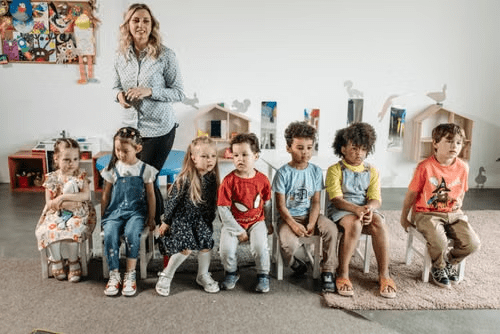
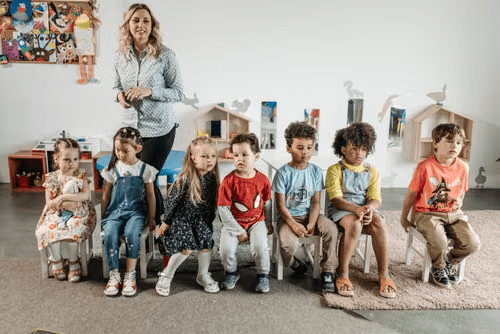
Some children talk early and confidently. Others are quieter but remarkably good at working through problems on their own. Some love group activities from day one. Others need more time before they feel comfortable in a crowd.
Good preschool programs in Fremont work with these differences rather than against them. The goal is never to compare one child to another. It’s to help each child move forward from wherever they are.
How can parents encourage school readiness at home?
It doesn’t require a curriculum or a structured routine. Small, consistent things make a real difference.
- Read together regularly- it doesn’t have to be long
- Let children make simple choices throughout the day
- Talk during meals, in the car, while doing things around the house
- Give them small responsibilities and let them actually do them
- When they hit a small obstacle, give them a moment to work at it before stepping in
None of this needs to feel like preparation. It mostly just looks like spending time together.
How does Sparkle Montessori prepare children for lifelong learning?
At Sparkle Montessori, our thinking is that kindergarten readiness is really just the beginning. The deeper goal is helping children develop a genuine relationship with learning, one built on curiosity, confidence, and the satisfaction of figuring things out.
Through hands-on work, thoughtfully prepared classrooms, and teachers who know when to guide and when to step back, children build independence and communication skills at a pace that actually suits them.
Academic foundations matter too, but they develop alongside everything else.
School Readiness begins long before the first day of Kindergarten
There’s no single moment when a child becomes ready. It happens gradually, through the small experiences that teach them who they are as learners- what they’re capable of, how to handle something new, how to keep going when something is hard.
The preschools in Fremont, CA that understand this tend to produce children who don’t just know things when they arrive at kindergarten. They’re children who are ready to participate, to connect, and to grow, and that turns out to matter a great deal more.
FAQs
1. What does school readiness mean for preschool children?
It covers academic, social, emotional, and communication skills, the combination that helps children actually thrive in a kindergarten classroom, not just survive it.
2. Does my child need to know how to read before starting kindergarten?
No. Kindergarten teachers expect to teach reading. What helps is a child who’s curious, willing to try, and comfortable in a group setting.
3. How does a Montessori preschool prepare a child for school?
It allows children to get practical experience of being independent, solving problems, concentrating, and taking responsibility through their activities, not rote training.
4. Why is early childhood education important?
It helps kids become better communicators, more socially active, curious, and efficient learners, which will be useful when they go to school.
5. How do I know if my child is prepared for school?
Look at some subtle signs: Can he perform simple tasks, ask for help, participate in group activities, overcome minor difficulties? Those signals matter more than any single academic skill.